Table of contents
Open Table of contents
Introduction
I wanted to build a Sudoku app. When I explored the web, I found countless options—many of them work great. But I wanted to build something for fun, to put my knowledge and curiosity to work. That got me thinking: what if I focused on performance and speed? What if I pushed the boundaries of what’s possible in the browser?
The result: a fast, offline-first Sudoku app built with React and Rust/WASM, running entirely in the browser with no backend.
Try it live: https://sudonova.rajendrasinh.com/
At a glance
- Goal: fast, offline-first Sudoku that runs entirely in the browser.
- UI: React renders the grid, keypad, and game chrome (Non interactive elements of the application).
- Engine: Rust + WebAssembly handle anything performance-sensitive.
- Concurrency: a Web Worker owns puzzle generation so the main thread stays responsive.
In very rough pseudocode, the app behaves like this:
onAppStart():
  renderEmptyBoard()
  initWasmEngineInBackground()

onCellTap(cell):
  selectCell(cell)

onNumberTap(n):
  board = engine.applyMove(board, selectedCell, n)
  updateUI(board)
  if !engine.isMoveValid(board, selectedCell, n):
    showErrorFeedback()

onHintTap():
  hint = engine.getHint(board)
  highlightHint(hint)

onNewGameTap(difficulty):
  showGeneratingState()
  board = await engineWorker.generatePuzzle(difficulty)
  hideGeneratingState()
  updateUI(board)
Choosing the Stack
The JavaScript problem
A Sudoku engine does repetitive work—validating moves, computing candidates for 81 cells, running solvers for hints and generation. On mobile, plain JavaScript struggles: GC pauses cause stutters, and the interpreted nature means even optimized code runs slower than compiled alternatives.
WASM + Rust:
The performance-critical choice. Handles generation, solving, hints, and candidates. WASM runs at near-native speed, compiled ahead of time. Rust adds type safety, zero-cost abstractions, and no garbage collector—perfect for hot paths that run thousands of times per game.
Rust’s type system and cargo test make the core logic easy to reason about. wasm-bindgen provides a clean JS boundary. No GC, no runtime surprises—just predictable, fast code.
Performance comparison:
- JavaScript: ~50-100ms puzzle generation, perceptible lag on candidate computation, GC pauses cause stutters
- WASM/Rust: ~10-20ms puzzle generation, instant candidate computation, no GC pauses
React
I was familiar with React. The main bottleneck was the Sudoku engine, So decided to go with React for the first release. Easy to optimize with useMemo and useCallback.
No backend
Puzzles generate in-browser, state lives in memory, PWA caches for offline. Static site, deploy anywhere.
wasm-pack web target: Outputs ES modules that load directly in the browser. Works with Vite via dynamic import—no WASM plugin needed. Engine loads asynchronously; UI renders immediately, hints appear when ready.
Architecture
React UI → engine facade → WASM (main thread for hints/candidates) or Web Worker (for generation). The diagram below shows the flow:
flowchart TB
  subgraph Main["Main thread"]
    UI[React UI<br/>BoardGrid, Keypad, Toolbar]
    Engine[Engine facade<br/>init, getHint, computeCandidates]
    WC[EngineWorkerClient]
    WASM_Main[WASM<br/>get_hint, compute_candidates]
    UI <-->|state & events| Engine
    Engine -->|getHint, computeCandidates| WASM_Main
    Engine -->|generatePuzzle| WC
    WC -->|postMessage| SudokuWorker
    SudokuWorker -->|board| WC
    WC -->|Promise resolve| Engine
  end

  subgraph Worker["Web Worker"]
    SudokuWorker[sudokuWorker]
    WASM_Worker[WASM<br/>generate_puzzle, set_seed]
    SudokuWorker --> WASM_Worker
  end
Engine boundaries in code-ish form
The UI only calls a tiny engine surface; everything else stays hidden behind it:
// main thread – used by React components
type Board = number[][];

export async function initEngine() {
  await initWasmIfNeeded(); // one-time WASM init
  await initWorkerIfNeeded(); // one-time worker init
}

export function computeCandidates(board: Board, cell: Cell) {
  return wasm_compute_candidates(board, cell);
}

export function getHint(board: Board): Hint {
  return wasm_get_hint(board);
}

export function generatePuzzle(difficulty: Difficulty): Promise<Board> {
  return workerRequest({ type: "generate", difficulty });
}
And on the worker side:
// sudokuWorker.ts (runs off the main thread)
self.onmessage = async event => {
  if (event.data.type === "generate") {
    await initWasmIfNeeded();
    const board = wasm_generate_puzzle(event.data.difficulty);
    self.postMessage({ board });
  }
};Flow: React holds board state. Engine initializes WASM on first use (via requestIdleCallback). “New Game” → worker client → worker posts message → worker WASM generates puzzle → posts board back → UI updates.
Performance Thinking
WASM: Hot paths run in compiled code. Candidates and hints run on the main thread (fast enough to be non-blocking), while generation runs in a worker to keep the UI responsive. Clear UI/engine boundary enables independent optimization.
Perceived performance: Visual feedback (success pulse, error shake) matters more than raw solver speed.
Mobile-first: Touch targets, layout, and interactions designed for small screens from the start. Minimal stack: React, Vite, WASM—smaller bundle, fewer moving parts.
Lighthouse Results
The performance-focused architecture paid off. Here are the Lighthouse scores:
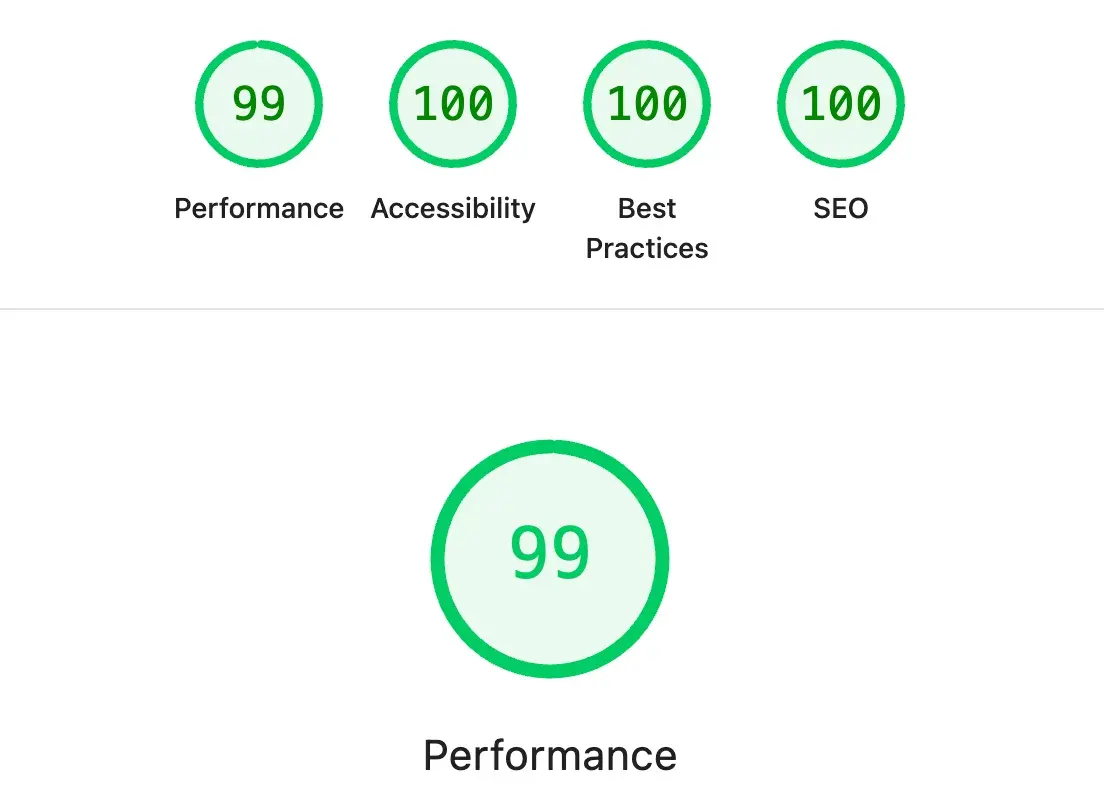
- Performance: 99/100
- Accessibility: 100/100
- Best Practices: 100/100
- SEO: 100/100
The near-perfect performance score validates the WASM approach—instant interactions, non-blocking generation, and optimized bundle size all contribute to a fast, responsive experience.
UX and Polish
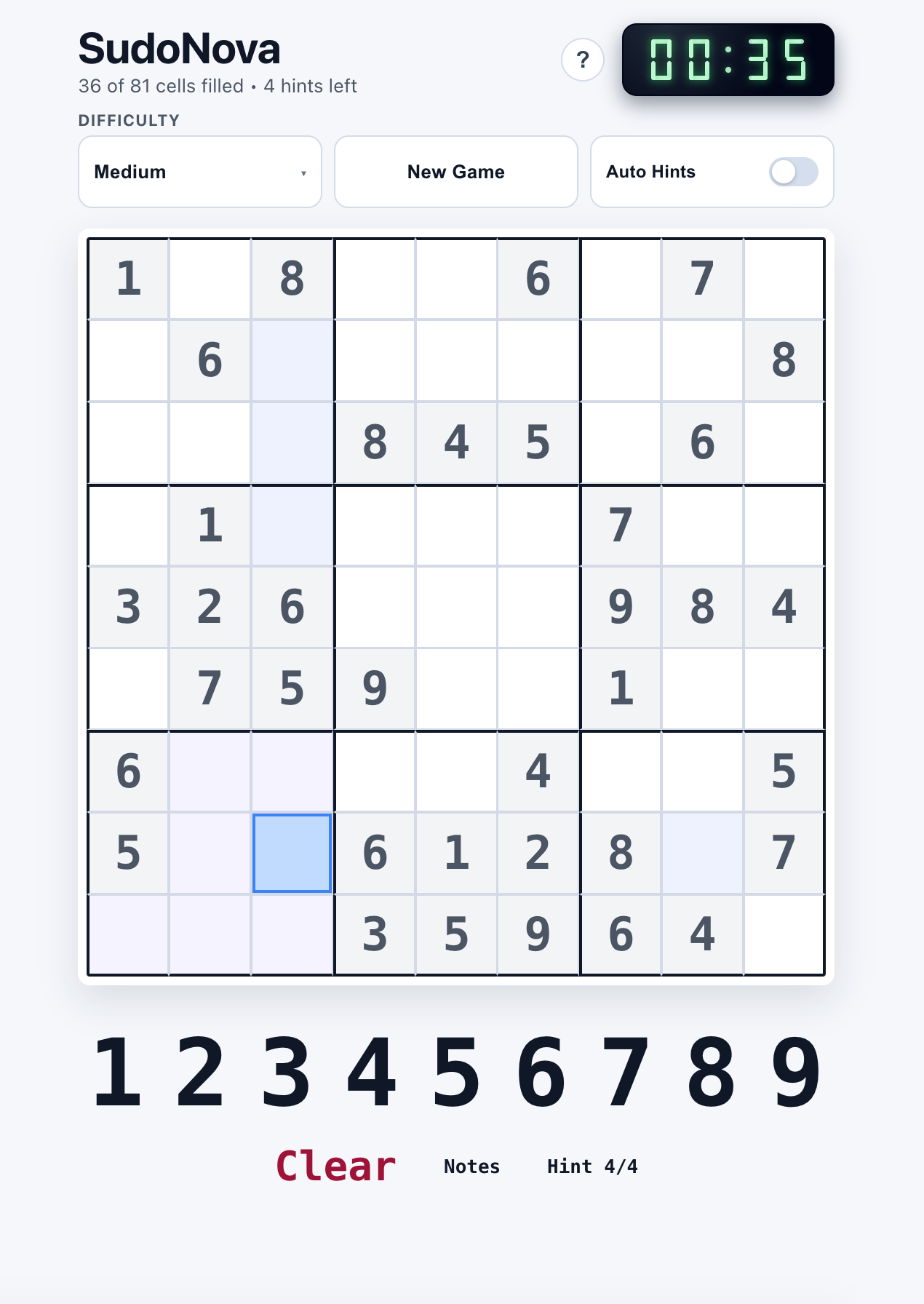
Keypad: Bottom-mounted number pad for mobile. Tap cell → tap number. Includes Clear, Notes, Hint—one tap away.
Touch-first: Large hit areas, no hover-only behavior, visual feedback without cursor. PWA support (installable, offline) makes it feel native once installed.
Lessons Learned
WASM init: Must be async. Guard against double-init, defer with requestIdleCallback to avoid blocking first paint. Handle unmounts with a cancelled flag to prevent leaks. Explicit control > magic auto-loading.
React wasn’t the bottleneck: Expensive work is in WASM/worker. useCallback/useMemo where needed kept re-renders cheap. Optimize where the cost actually is.
Perceived > raw speed: Instant feedback and non-blocking generation matter more than a 2x faster solver.
Closing Thoughts
Next steps: Improve puzzle quality (removal counts, uniqueness), stronger solver for hints, maybe light animations or SolidJS experiment.
Takeaway: Small, focused apps are underrated. No backend, no auth, one problem, one goal. If you’ve been putting off a small idea because it doesn’t feel “full-stack” enough, it’s worth a shot. Sometimes the best thing to build is the one that does one thing well.